It's Only A Rehearsal
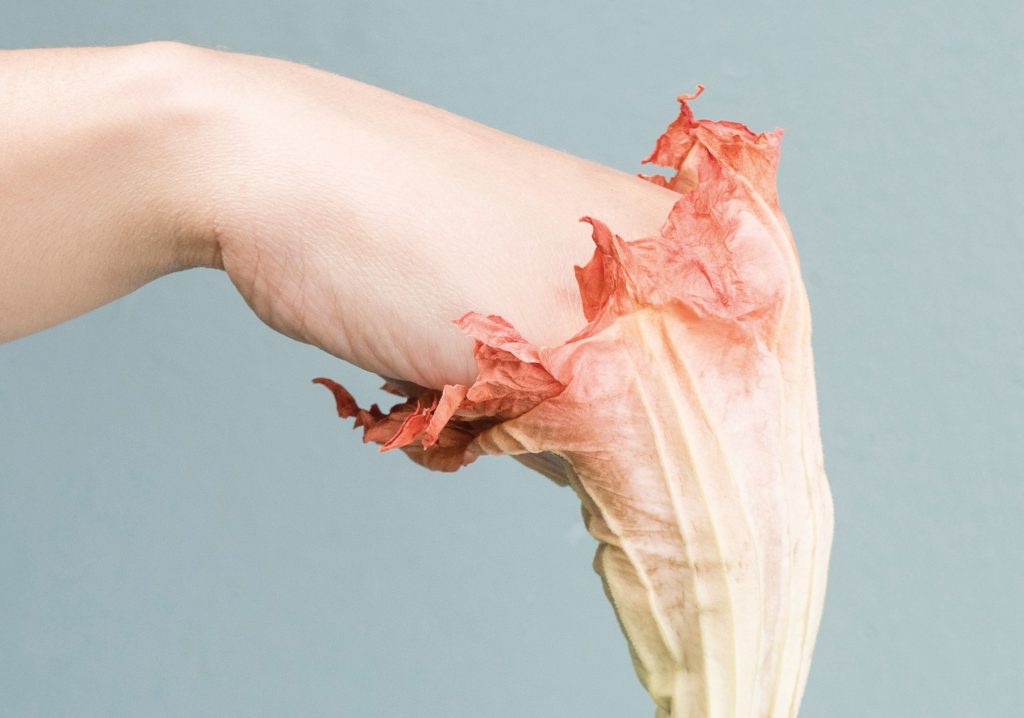
Join us at the opening of the group exhibition “It’s Only A Rehearsal”, curated by Tevž Logar, on Friday, November 27, at 7 PM.
Artists: Maria Guțu, Petrit Halilaj, Blerta Hashani, Nona Inescu, Sara Salamon, Bojan Stojčić
At the exhibition opening, Bojan Stojčić will present his performance “History to the Stone, Future to the Wind”.
More than two decades ago, the words that lend this exhibition its title emerged from the encounters depicted in Wong Kar-wai’s film In the Mood for Love. These are moments shaped by deflection, repetition, and the quiet choreography of withheld feeling, in a world where intimacy does not declare itself, but circles, rehearses, and refracts. Two neighbours, bound together by the suspicion that their partners are having an affair, begin to mirror what has already taken place beyond their reach. Yet what emerges between them is not an affair, but a fragile structure of proximity – sustained through gestures, pauses, and repetitions that never quite resolve into action. Their encounters unfold in corridors, on staircases, in rented rooms – spaces of passage rather than belonging, where they rehearse conversations that may have happened elsewhere, speaking words that are not entirely their own, as if exploring the contours of a shared wound. What binds them is not certainty, but attunement: a mutual recognition shaped through absence, restraint, and the ethics of not crossing a line that remains both necessary and unbearable. The relationship is sustained precisely through its lack of completion. At a certain threshold, language begins to thin, meaning shifts into texture: the rhythm of footsteps, the brush of fabric and the repetition of a melody. Time itself folds, not into narrative progression, but into a series of reappearances – each encounter slightly altered, each gesture carrying the residue of what could not be realized. In one of the film’s most resonant acts, a secret is spoken into a small hole in a wall and sealed away, entrusted to the material world rather than to another person. Communication becomes displacement; intimacy, an archive of what cannot be shared.
This logic of deferred expression and mediated closeness forms the conceptual foundation of the present exhibition. Here, connection is not understood as stable or transparent, but as something that emerges through distance, misalignment, and partial visibility. To be close is not to fully know, but to remain attentive within uncertainty – to inhabit the interval between gesture and response, presence and withdrawal. In this sense, fragility is not the failure of connection, but its very condition. The works gathered here operate within this suspended field: they do not seek to resolve tension, but to sustain it – to trace how memory, affect, and materiality intersect in ways that resist closure.
Through the selected works and the quiet echoes between them, connections take shape and persist, carried across bodies, places, memories, and time. Maria Guțu’s photographic series Homeland and By the Water explore memory, migration, and the fragile relationship between people, the landscape, and the idea of home. Her images move between intimate encounters with communities and broader questions of belonging, tracing how personal histories become embedded in places and how landscapes can carry memories of displacement, attachment, and loss. This relationship between place, memory, and inherited experience is further complicated in the work of Petrit Halilaj. In the series Abetare and Like the Tail of Arnauts, he reworks historical traces rather than simply preserving them, transforming inherited memories and narratives into forms of imagination and resistance. By bringing together childhood, history, and the body, the works question how identities are shaped by the stories we inherit, while opening up a space for alternative ways of remembering and imagining the past.
If history is carried through places and inherited narratives, it is also carried through the body. The works of Nona Inescu focus on the relationship between the human body and the environment, redefining the human subject from a posthumanist perspective. Drawing on poetic and literary references as well as scientific research, her series of photographs and objects combine anatomical fragments with geological, botanical, and other natural forms, creating hybrid objects and images in which the boundaries between body and landscape, human and non-human, become fluid. This movement between the human body and its surroundings also resonates in Blerta Hashani’s series of paintings, where the landscape is approached through the rhythms and textures of rural life. Bringing together expressive depictions of people, animals, vegetation, and everyday objects with abstract and intuitive forms, her landscapes are less representations of specific places than spaces shaped by memory, experience, and perception, where the familiar gradually shifts between observation and imagination.
The relationship between the familiar and the uncertain becomes spatial in Sara Salamon’s intervention The Colunm, which slowly moves toward and away from its architectural counterpart, disrupting the apparent stability of the space. Hovering between object and architecture, function and fiction, it introduces a subtle sense of uncertainty, turning a familiar spatial environment into something unstable and making us question what we see and how we orient ourselves within it. Here, the question of how we inhabit a space leads back to the body as a site of memory and experience. The performance and object History to the Stone, Future to the Wind by Bojan Stojčić extends the unresolved histories of particular sites into the present time, with the body becoming a temporary carrier of memory and action. As the object gradually disappears, it evokes the fragility of memory and the body’s role in carrying traces of the past, suggesting how histories can persist even as the forms that hold them begin to fade.
Forms appear and dissolve; narratives fragment; surfaces hold and withhold, so what is offered is not a coherent account, but a constellation of impressions through which relationships are continuously rehearsed, displaced, and reconfigured. In a present shaped by accelerated communication, algorithmic proximity, and the erosion of shared temporalities, intimacy is increasingly negotiated through layers of mediation. Encounters are frequent, yet often partial; visibility is amplified, yet rarely reciprocal. Within such conditions, the question is not how to restore an imagined wholeness, but how to remain responsive within fragmentation – how to sustain attention, care, and responsibility when connection itself is unstable.
The exhibition thus unfolds as a space of attunement rather than resolution; it foregrounds practices that embrace hesitation, repetition, and permeability as modes of engagement. Across different media, artists articulate connections that are provisional, contingent, and often unresolved – yet no less real for their incompleteness. What emerges is not a unified narrative, but a field of echoes, gestures that persist, memories that linger, and encounters that remain open, insisting on the possibility of connection even as it slips from one’s grasp.
Text by Tevž Logar
ABOUT THE ARTIST AND THE CURATOR:
Maria Guțu (b. 1996, Republic of Moldova) is a visual artist and photographer whose practice explores remote places, youth, the notion of home, and the relationship between people and their environment. She graduated in cinematography from the Academy of Music, Theatre and Fine Arts in Chișinău in 2020 and completed her studies at the Docdocdoc School of Modern Photography in Saint Petersburg in 2022.
In 2018, Guțu was selected as one of Artpil’s 30 Under 30 Women Photographers. She has been a member of Women Photograph since 2021. Her portraits from the series Homeland were shortlisted for the Sony World Photography Awards in 2022 and 2023. In 2023 and 2024, she received recognition through the British Journal of Photography’s Portrait of Humanity initiative, including shortlist selections and a winning entry. In 2023, she was awarded a mentorship grant from the VID Foundation.
In 2024, Guțu received the Leica Oskar Barnack Newcomer Award for her long-term project Homeland. Her work has been presented in group exhibitions internationally, including in Romania, Germany, the United Kingdom, Hungary, Spain, and the United States.
Petrit Halilaj (1986, Kostërrc, Kosovo) lives in Berlin. He understands exhibitions as a way of altering the course of personal and collective histories, creating complex worlds that claim space for freedom, desire, intimacy, and identity. His work is deeply connected to the recent history of his native country Kosovo and the consequences of cultural and political tensions in the region, which he often takes as a starting point for igniting a countercurrent poetics for the future. Rooted in his biography, his projects encompass a variety of media, including sculpture, drawing, painting, text, and performance. Often incorporating materials from Kosovo and manifesting as ambitious spatial installations, his work transposes personal relationships, places, and people into sculptural forms. Halilaj’s practice can be seen as a playful and, at times, irreverent attempt to resist oppressive politics and social norms towards an untamed celebration of all forms of connectedness and freedom.
Awards: Laureate of the Nasher Prize, Dallas (2027); Smithsonian Artist Research Fellowship (2018), Washington, D.C.; Mario Merz Prize, Turin (2017); Villa Romana Fellowship, Florence (2017); MAK, Los Angeles (2016).
Blerta Hashani (b. 1997, Mirash, Ferizaj, Kosovo) is a visual artist working across painting, drawing, and photography. She graduated from the Faculty of Fine Arts in Prishtina. Her practice is shaped by rural and peripheral spaces and landscapes, mysticism, and symbolism. She transforms experience, perception, and memory into images that open up new metaphorical dimensions of seeing, feeling, and imagining anew.
Selected exhibitions include The Sun on the Blades of Grass (Bazament Art Space, Tirana), Unfolding Currents: The Pulse of Time (Autostrada Biennale, Prizren), Silent Threads Resounding Kosova (Galleria Continua, Paris), Cicërimat në Mjegull (ARKIV – Institute of Contemporary Art, Peja), MEMORIZONIM (LambdaLambdaLambda, Prishtina), Jahresgaben (Bonner Kunstverein, Bonn), New Grand (Manifesta 14, Prishtina), and A Story upon the Green (Mill of Nazif, Mirash). She has participated in residency and research programmes across Europe, including at the Milvus Artistic Research Center in Sweden and Kulturzentrum PROGR in Switzerland, and was nominated for the “Artists of Tomorrow” Award in Prishtina.
In 2025, Hashani was featured in Art Basel’s “10 Newcomers to Discover.” She lives and works in Mirash, Kosovo.
Nona Inescu (b. 1991) lives and works between Athens, Greece, and Bucharest, Romania.
She completed her studies at the National University of Arts in Bucharest, following her education at the Chelsea College of Art & Design in London and the Royal Academy of Fine Arts in Antwerp.
Her interdisciplinary artistic practice includes photography, installation, sculpture, and video works. Grounded in theoretical and literary perspectives, her works focus on the relationship between the human body and the environment and the redefinition of this subject in a post-human key. Concepts of geological time and our intense interrelation with our surroundings compose an aesthetic of a primal contemporary togetherness in an organic and biological techno-sphere.
Recent exhibitions have taken place at Art Encounters Foundation (Timișoara); Catinca Tabacaru Gallery (Bucharest); Musée de l’Homme (Paris); Haus N (Athens); Gunia Nowik Gallery (Warsaw); Künstlerhaus Wien (Vienna); Lentos Kunstmuseum (Linz); Kandlhofer Galerie (Vienna); Salonul de Proiecte (Bucharest); Brooke Benington (London); Sylvia Kouvali (London); Goethe-Institut (Bucharest, Athens); Le CAP Saint-Fons (Lyon); Kunstraum Kreuzberg (Berlin); Musée de l’Art Moderne et de l’Art Contemporain (MAMAC, Nice); Radius (Delft); Art Encounters Biennale (Timișoara); KVOST (Berlin); Contemporary Fine Arts (Berlin); basis (Frankfurt); Tallinn Art Hall (Estonia); Museo della Montagna (Torino), among others.
Sara Salamon (b. 1991, Rijeka, Croatia) is a visual artist and moving-image designer whose work spans a range of artistic practices. She often seeks to betray the medium, drawing inspiration from collective wilderness and an elusive reality. Her interests lie in public space, particular sites, and unexpected intersections of media.
She has received awards for both individual and collaborative projects, including at the 35th Youth Salon and the 55th Zagreb Salon. She has also participated in artist residency programmes at institutions such as Akademie Schloss Solitude, Q21 – MuseumsQuartier in Vienna, and Bergen Centre for Electronic Arts in Norway, as part of Future DiverCities 2019.
Between 2013 and 2026, she presented her work and collaborative projects in numerous solo and group exhibitions, as well as at institutions and festivals including the Museum of Modern and Contemporary Art in Rijeka, the Richter Collection of the Museum of Contemporary Art in Zagreb, Bjelovar City Museum, Ujazdowski Castle Centre for Contemporary Art in Warsaw, Apoteka – Space for Contemporary Art, VN Gallery, Kortil Gallery, Music Biennale Zagreb, Touch Me Festival, the Youth Salon, and the Zagreb Salon.
She is a member of the informal collectives M28 and Platforma za eksperiment, and her most frequent artistic collaborator is Hrvoje Spudić.
Bojan Stojčić (b. 1988, Sarajevo, Bosnia and Herzegovina) is a Bosnian-Herzegovinian visual artist. Through his multimedia works, Stojčić critically engages with auto-colonial discourse and affect in the post-Yugoslav space, questioning collective and individual perceptions of the peripheral Other, as well as of oneself. His experience of war during early childhood has profoundly shaped his artistic expression. Marked by experiences of loss, absence, displacement, and transition in both public and private life, Stojčić positions himself as a subject of the European periphery, simultaneously claiming and subverting this position. Through a simple, reduced visual language, his work marks places of belonging at the margins of histories and empires, questioning the positions predetermined within them. Weaving together humour, poetics, and geopolitics, he explores the traces and transformations of the present.
His most recent awards and fellowships include the Gallery Award at the 32nd Nadežda Petrović Memorial (Serbia, 2024), the ZVONO Award for Young Visual Artists in Bosnia and Herzegovina (2023), a WHW Akademija scholarship for emerging artists (Croatia, 2022), and the Revizor scholarship for achievements in science and art (Bosnia and Herzegovina, 2022).
Recent exhibitions include Discoteca Mediterranea (Galerija Manuš, Split, Croatia, 2026); Technologies of Peace: Art and Transition in Contemporary Europe (1989–2026) (Irish Museum of Modern Art, Dublin, Ireland, 2026); Bureau fantôme (Sorbonne Université, Paris, France, 2026); Antifascism: Now. (Lothringer 13 Halle, Munich, Germany, 2026); and Art Encounters Biennial 2025: Bounding Histories. Whispering Tales (Art Encounters Foundation, Timișoara, Romania, 2025).
Tevž Logar is an independent curator, editor, and author based between Ljubljana and Rijeka. His curatorial work includes Memory of Touch: Kunsthalle Praha Collection in a Dialogue (2026), Art Encounters Biennial (2025), U3 – Triennial of Contemporary Art (2024), and the Slovenian Pavilion at the 55th Venice Biennale (2013), among numerous other exhibitions and projects. He has collaborated with leading international institutions and collections, including the Museum of Modern and Contemporary Art, Łódź, Moderna galerija Ljubljana, Kunsthalle Praha, Fondazione Sandretto Re Rebaudengo, TBA21, the Ovidiu Șandor Collection, CAC Genève, Ludwig Museum Budapest, and Kontakt Collection. From 2009 to 2014, he was artistic director of Škuc Gallery in Ljubljana, and he is a co-founder and current advisory board member of the Ulay Foundation in Amsterdam.
Cover image: Nona Inescu, Brugmansia (Angels Trumpet of Death), 2021