Mara & Lara
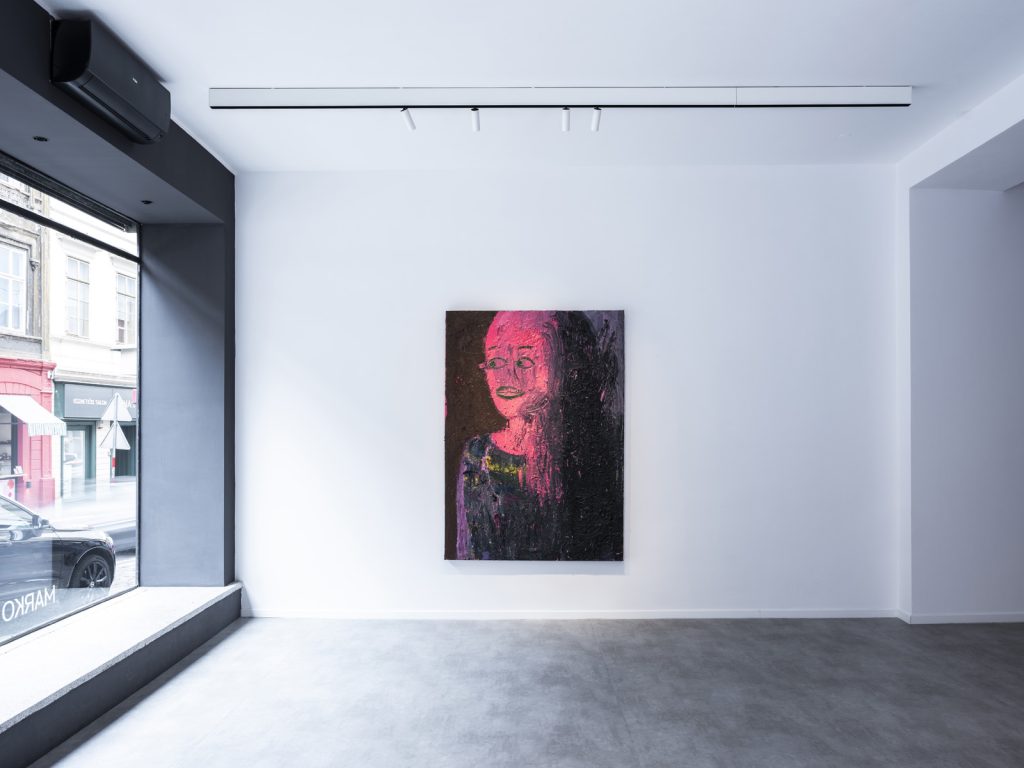
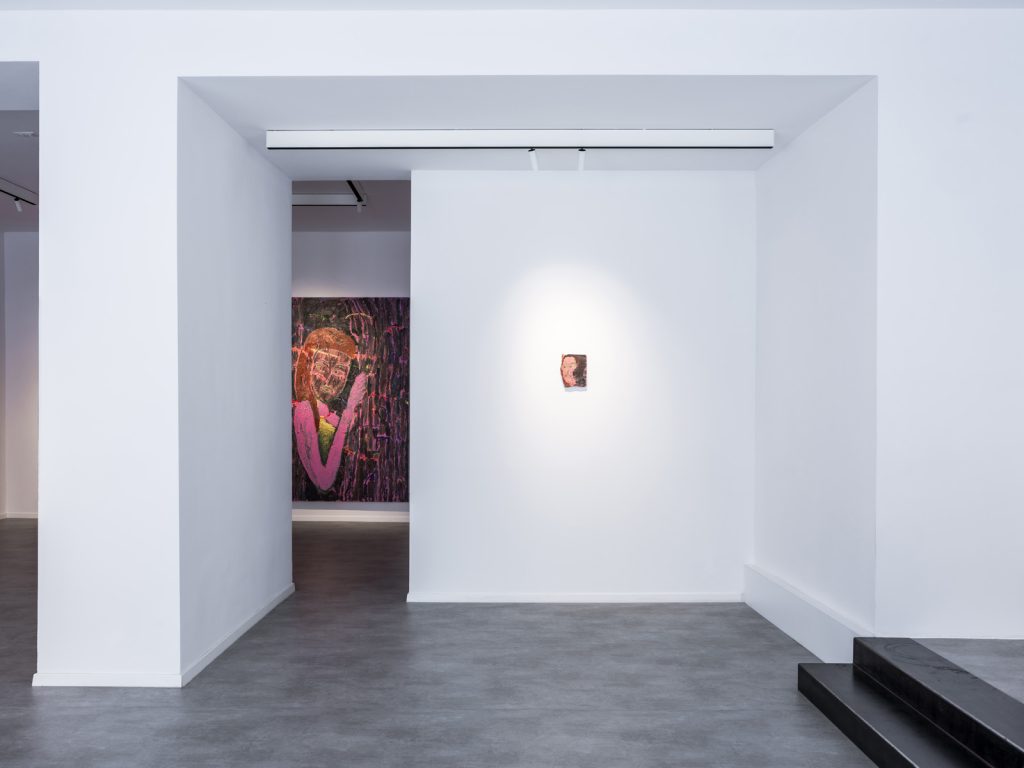

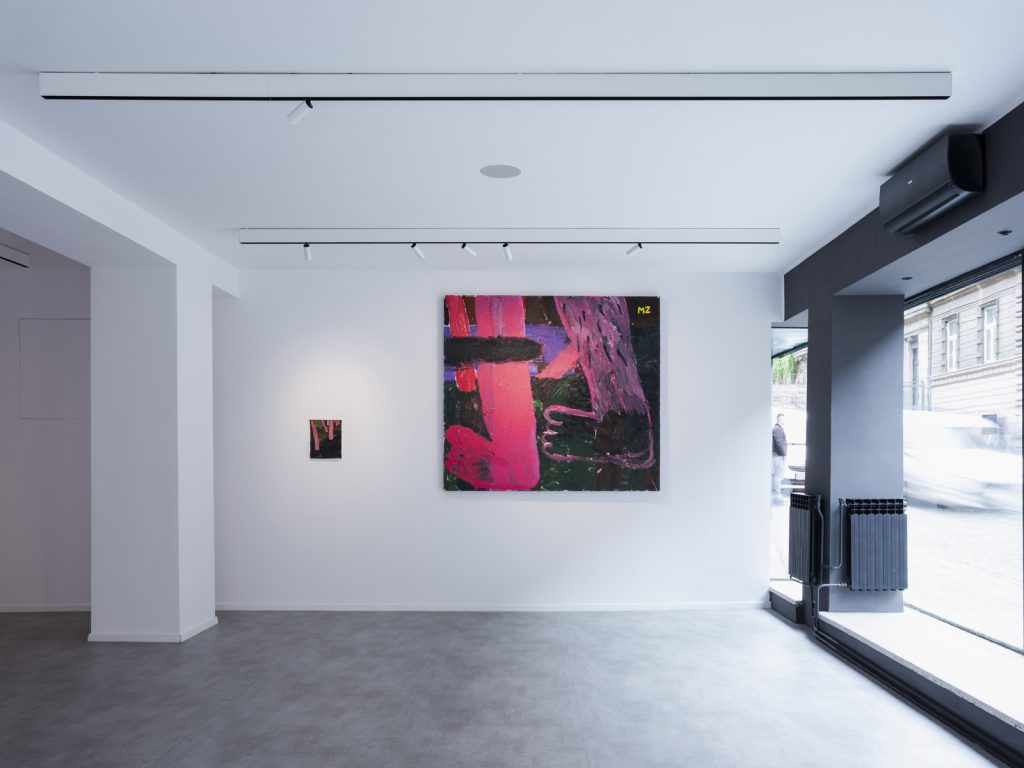
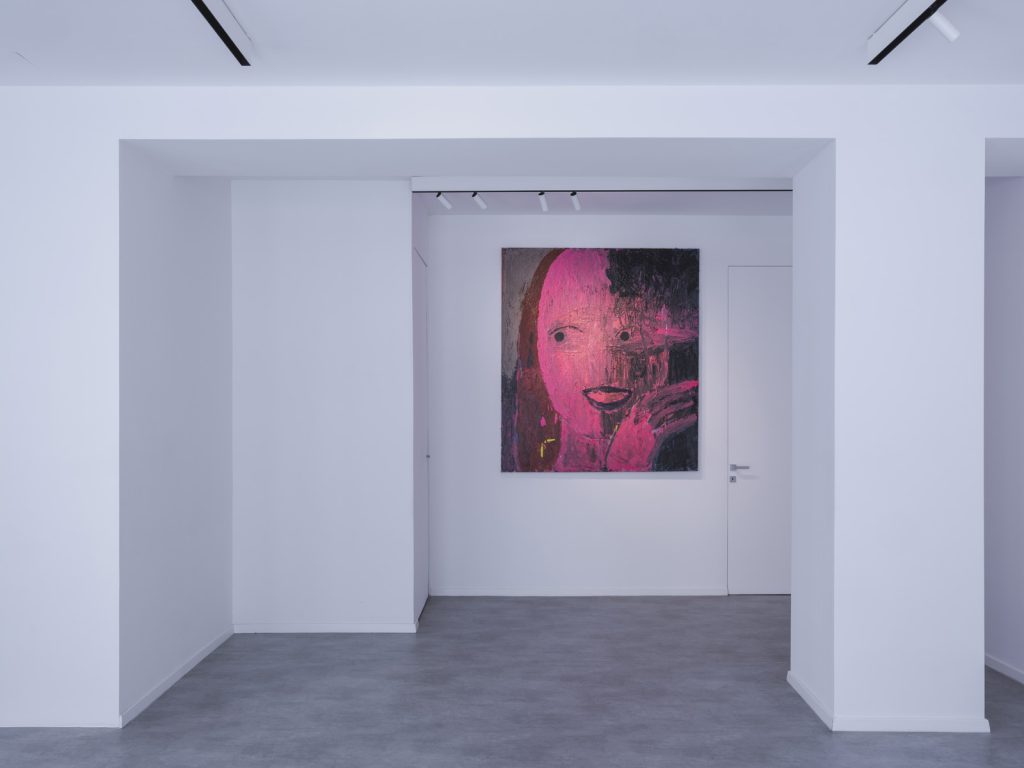
All of a sudden, a woman’s face appears on the screen. She takes over the scene. She takes me over. Time stands still, the space melts away as we look into each other’s eyes. Silence… An almost unbearable sense of anticipation. A small, but perceptible jolt. As if cut with a knife, lips spread into a smile.
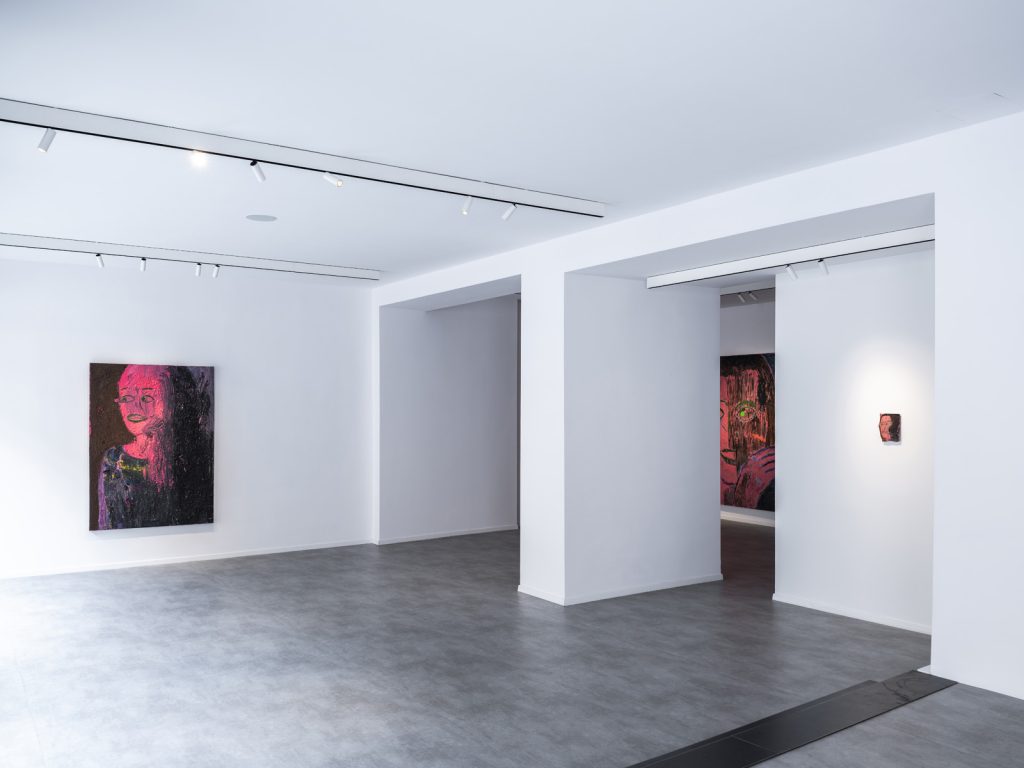
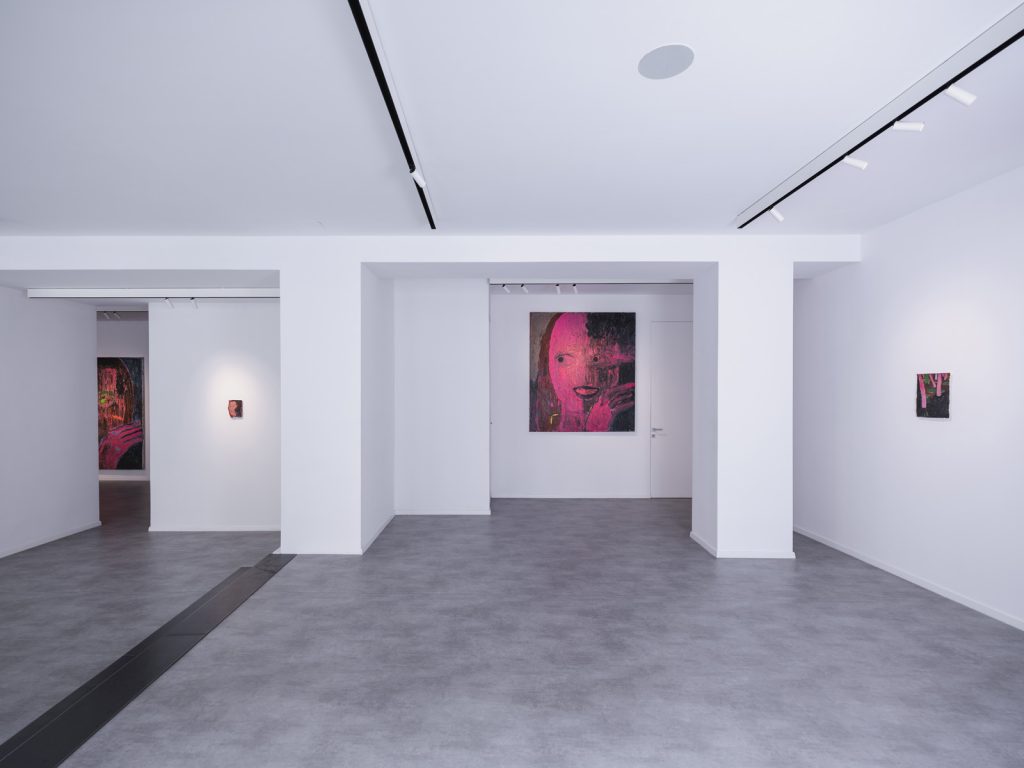
Close-ups in cinematography are a dramaturgical approach that limits and directs the attention of viewers. Characters and items can be set apart, isolating and enhancing them through cuts to the scene. They lead to a reduction in the narrative and the amount of visual information. The viewer is given a sense of “closeness”, of being “drawn in” to the scene, and this is accompanied by an increase in suspense and identification. Through direct observation of magnified faces, viewers are left with a sense of the pure physicality of the body – its solidity, its plasticity, its personality. Marko Zeman’s new solo exhibition leaves the impression of having been put together out of movie clips depicting events that are unclear and, in fact, unimportant. Because MZ is not a narrative painter. His approach is one of conscious removal from the depiction of stories, from the illustrative and descriptive dimensions of painting. He distils an event down to its key point, so that the space of the painting, and of the gallery, is dominated by the large faces of his two female figures. Let’s call them Mara and Lara.
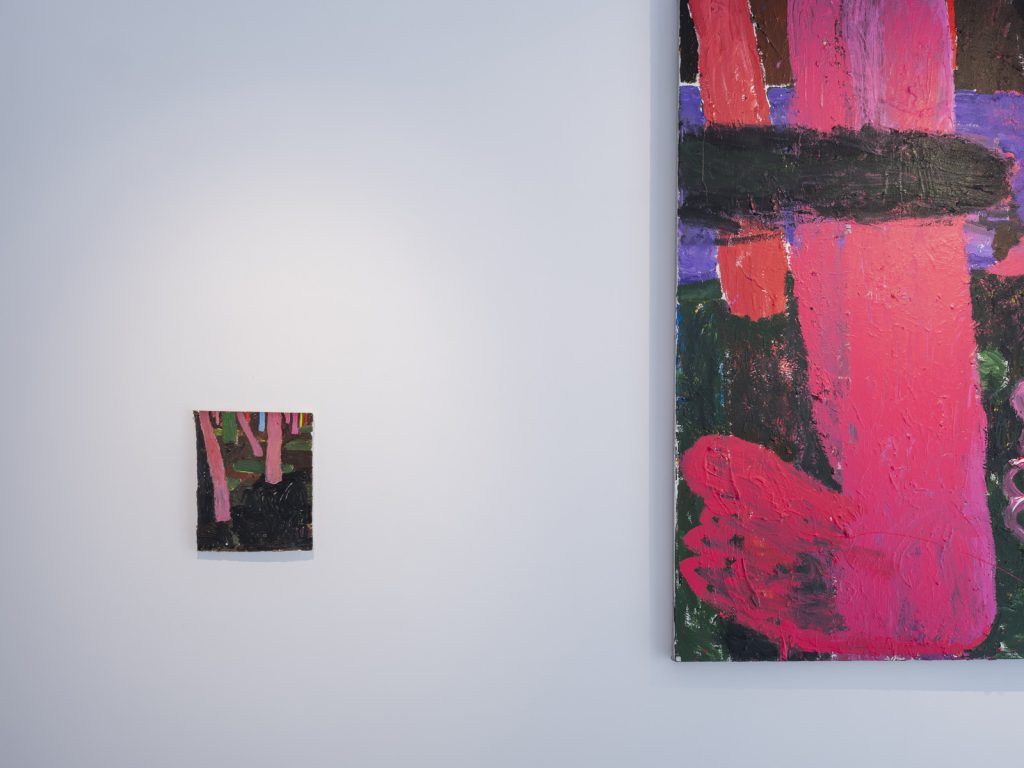
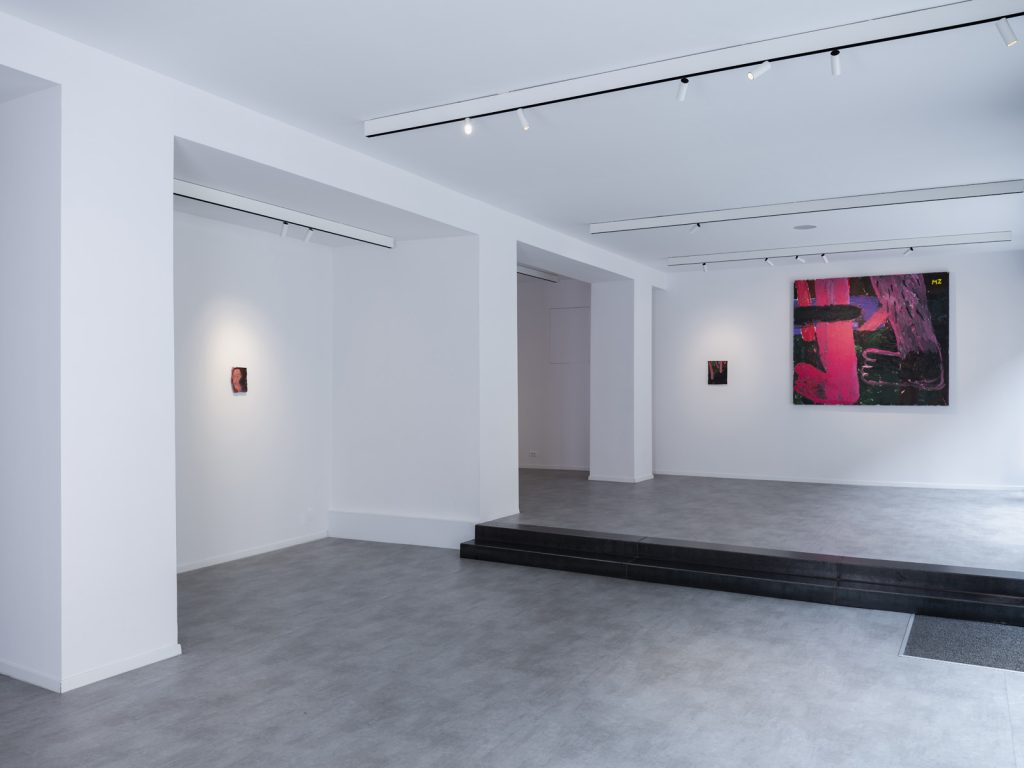
This series of portraits is simple, easy to comprehend, yet complex. Mara and Lara are robust figures that occupy the entire painting field (indeed, they would reach beyond it if they could). They stand fast in a stable central position, in their frontal perspective and dramatic gazes. These kinds of theatrical scenes evoke the portrayal of figures in early silent films, with their pictorial characteristics: flat scenes, the careful incorporation of figures into shots, and exaggerated gestures and eyes. This is where the fabulistic potential ends, however; Zeman is not interested in staging anecdotes further. Instead, he repeats motifs and focuses on studying the painting’s material. “I remove everything, I don’t want to hide behind anything”. He constructs his figures using a reduced visual language, simplifying anatomy, using exaggerated dimensions, ignoring perspective. He emphasises the prosaic nature of his subject until the moment when he transforms it into the unexpected. By isolating the figure he encourages us to uncover form. Slowly, and over a long period of time, we absorb the double-eyed girls. We study the topography of their faces, discovering the face to be a rich and multilayered landscape in relief, full of small events. We watch as legs enter the forest, floating steps taken by invisible feet. Tactility. Feet that feel the grass beneath them in the night. It is impossible to miss the importance of colour in the paintings. Bold colours are the predominant characteristic of Zeman’s style. His approach is instinctive; the energetic and apparently chaotic layers of colour structure the painting, introducing the dimension of chance, which deforms figuration. “Chance is cleverer than me.” By exploiting the colour pink, he relativises its perception as fake, unctuous, sugary, worn out in the manner of pop-art, and kitschy. Pink is, above all, the colour of our bodies; and it can by all means be unhinged, twisted, and humorous.
-Martina Marić Rodrigues